
Bracken Hill School Enjoy, Believe, Achieve
Online Safety
Keeping Children Safe Online
At Bracken Hill School, we are committed to helping our pupils use technology safely, positively and responsibly. We recognise that being online is an important part of everyday life and learning, and we work to ensure that pupils are supported to understand both the opportunities and risks of the digital world. Our Online Safety Policy can be found here.
Through our curriculum and wider safeguarding work, pupils are taught how to stay safe online, protect their personal information, behave respectfully towards others and seek help when something worries them.
We recognise that some pupils may require additional support to understand and manage online risks. Therefore, we work closely with families and external agencies to promote safe and positive use of technology both in school and at home.
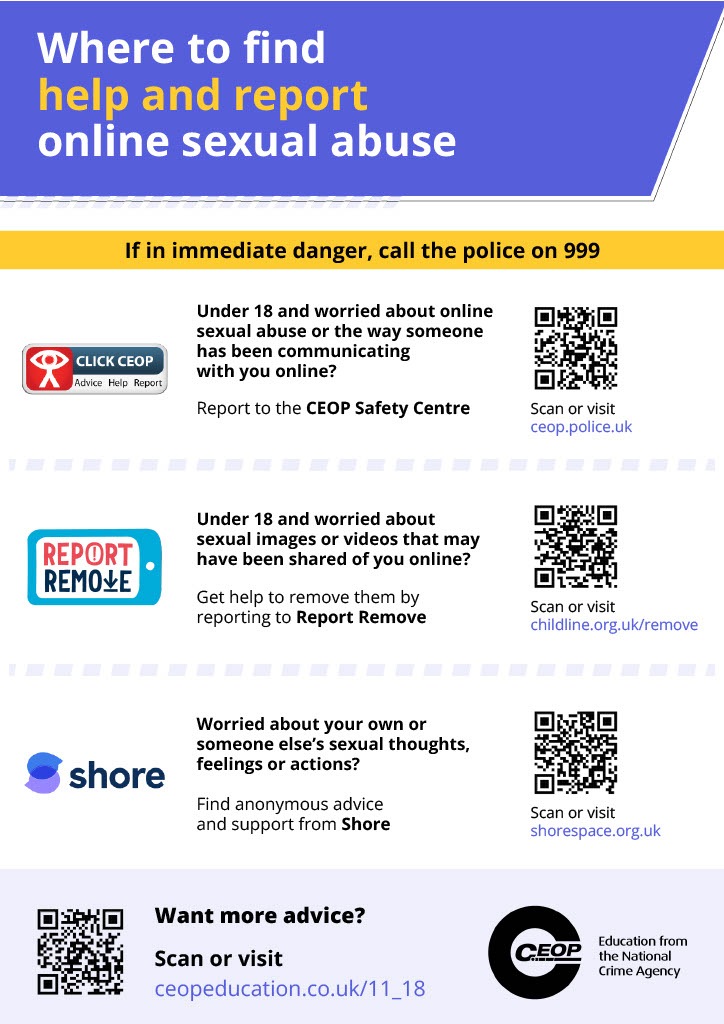
Are you worried about online sexual abuse or the way someone has been communicating with you online? Make a report to one of CEOP's Child Protection Advisors.

How We Protect Children Online
At Bracken Hill School, all devices and internet access are protected by robust filtering and monitoring systems to help keep pupils safe online. The school uses Classroom Cloud to support the monitoring of online activity and promote a safe digital learning environment.
Staff receive regular safeguarding training and supervise pupils' use of technology. Online safety is led by our Online Safety Lead and Designated Safeguarding Lead (DSL), Mrs Shelton, who oversees our online safety arrangements and responds to any concerns.
Staff Training
|
All staff, including teaching, site, support, office, wellbeing and midday supervisory staff, complete the following training annually. |
Online Safety | Cybersecurity | Safeguarding and Child Protection |
| Date completed | March 2026 | May 2026 | September 2026 |
|
Staff are also required to sign the school's Acceptable Use Agreement annually, ensuring a consistent whole-school approach to online safety and safeguarding.
Governors complete regular safeguarding and online safety training to enable them to fulfil their statutory responsibilities and provide effective strategic oversight and challenge. |
|||
Online Safety Resources for Parents and Carers
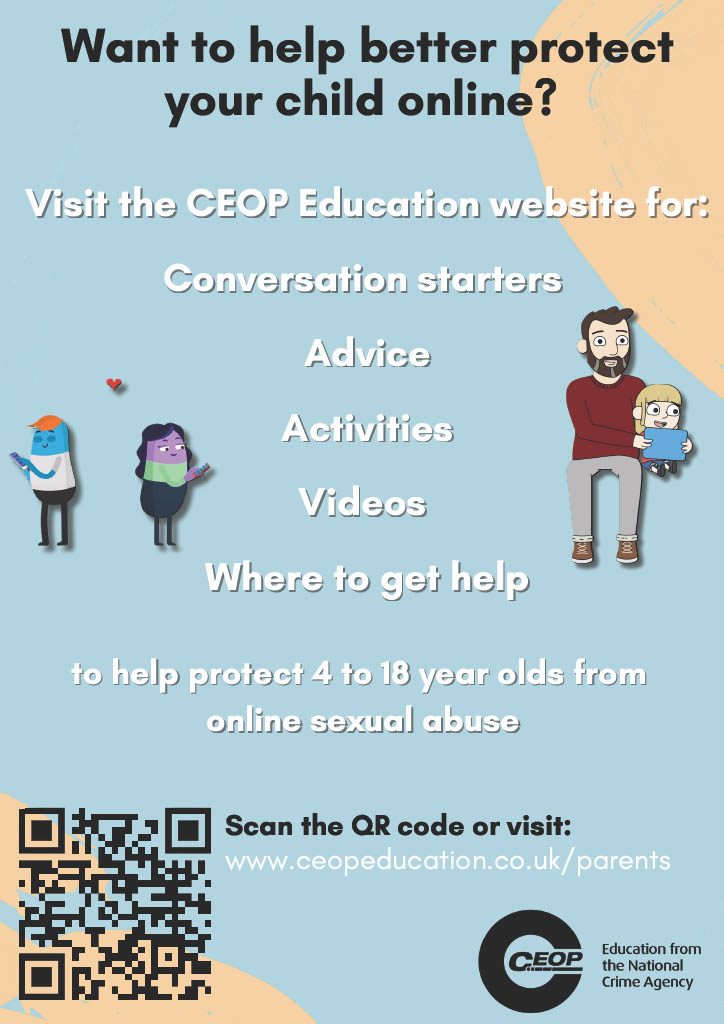
We recommend the following trusted websites for advice, guidance and support to help keep children safe online:
- CEOP Safety Centre – Online safety advice and reporting concerns about online abuse.
- NSPCC Net Aware – Reviews of apps, games and social media platforms used by young people.
- Get Safe Online – Information on cybersecurity, scams and staying safe online.
- Internet Matters – Practical advice, guides and parental controls.
- UK Safer Internet Centre – Resources, advice and reporting tools for online safety.
- Vodafone Digital Parenting – Support for parents navigating technology and digital life.
- UK Council for Internet Safety (UKCIS) – Government guidance on keeping children safe online.
- Common Sense Media – Reviews and age guidance for apps, games and websites.
If you have any concerns about your child's online safety, please contact Mrs Shelton, the school's Designated Safeguarding and Online Safety Lead. We are here to help and support families in keeping children safe online.
Curriculum and Learning
At Bracken Hill School, online safety is taught through a personalised and developmentally appropriate curriculum that reflects the needs of our pupils. Learning is adapted to support different communication styles, abilities and levels of understanding, enabling pupils to develop the knowledge and skills needed to stay safe online.
Pupils are supported to understand:
- Content – recognising harmful, misleading or inappropriate online content, including AI-generated material.
- Contact – understanding safe online interactions and recognising risks from strangers, scams or manipulation.
- Conduct – behaving responsibly, respectfully and safely online.
- Commerce – recognising online advertising, spending, scams and financial risks.
- Critical Thinking – questioning whether information, images, videos and AI-generated content are accurate and trustworthy.
- Consent and Privacy – understanding personal information, digital footprints and the importance of permission when sharing information or images.
Artificial Intelligence (AI)
Pupils are supported to:
- Understand that AI tools and chatbots can provide incorrect, misleading or biased information.
- Recognise that AI-generated images, videos and audio may not be real.
- Develop critical thinking skills when using AI-assisted search and learning tools.
- Know that personal information should never be shared with AI systems without adult guidance.
- Understand that AI can be a useful tool for learning but should not replace independent thinking, creativity or seeking help from trusted adults.
- Recognise that AI-generated content should be checked for accuracy and appropriateness.